

Make hay while you’re motivated and goal oriented. No days off.
More Thursday a.m.

Manfred Eicher. Our hero.
Thursday a.m.

This song used to be on a cd jukebox in a Ben and Jerry’s in Tel Aviv.
Wednesday a.m.

Can anything be more boring or self-aggrandizing than listening to someone talk or post messages about working out ? Maximum respect to those disciplined enough to exercise regularly but for goodness’ sake: shut up about it. Special shout out to shut the fuck up to the healthy eaters too. Memo to all: we all gonna die.
Tuesday a.m.
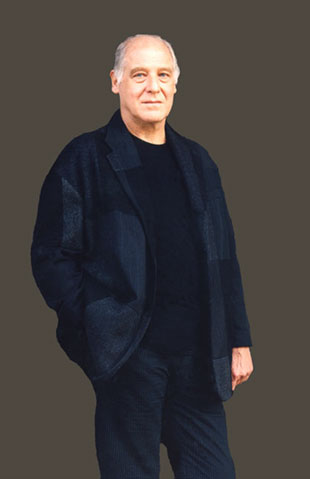
This is Michael Mantler. He ran two of the coolest, weirdest labels in jazz. And there are quite a few cool and weird jazz labels. Oh, he’s also a great player and composer. And he’s Austrian.
Monday p.m.
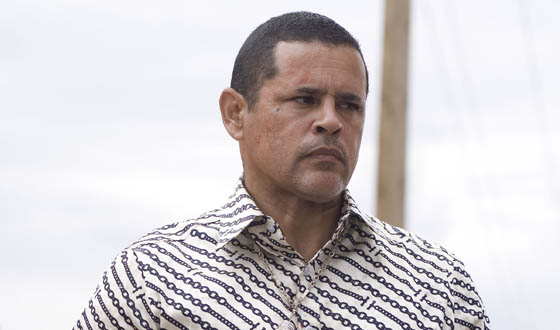
Raymond Cruz, who played an excellent villain in a small part in the Denzel classic Training Day, figuratively exploded as Tuco Salamanca in Breaking Bad. Will someone in Hollywood please give this guy a starring role. He’s one of the most believable actors in the world.
Monday a.m.

Steven Benjamin Mandel, who grew up in Bardonia, New York listening to Elvis Costello, is today’s Brown Brothers hero. But, he is much more than that. He is the architect behind our sound, having recorded and de facto produced our first two albums. As if that weren’t enough he is one of the best friends we are lucky enough to have had for the last 25-30 years.
As for his non-Brown Brothers work, we highly recommend Wise Up Ghost. Work with your idols? Absolutely. Tirelessly help your friends? Check. Do it all with the utmost generosity and humor? You bet. No one is without flaw but this guy is pretty close.
Sunday a.m.

Ho ho ho.
Saturday a.m.

There are many jazz fans in Japan. How can we best make them aware of our music?
Friday p.m.

We gaze from the eastern-most part of New York State to you jazz loving euros. We see you visiting our site and welcome your suggestions about how to sell our music on the continent.
Thursday a.m.

This is Creed Taylor. He is one of the most excellent and consistent producers in jazz history. If you don’t buy The Co-Op or Gold Sounds at least buy an album from one of his labels, CTI and /or KUDU. Here’s Creed’s philosophy:
“The fundamental thing always, whatever idiom of music we recorded, was to go for a groove,” says Taylor, whose sides still resonate with dance-oriented deejays and remixers around the world. “With CTI we might keep the rhythm section playing for an hour on the same 12 bars—when it begins to sound like it’s just about to lock in, then you start to record. Of course, you have to start off with a good song. Now, Jobim was a genius beyond generations, who created melodies and harmonies that made the whole thing so appealing. Still, he would sit at the piano, or guitar, and work a samba groove over and over until it clicked. On Gil Evans’ Out of The Cool, we went four days without recording anything, because Gil couldn’t get it down on paper. Finally, Gil worked up a little groove with Tony Studd on bass trombone and the drummer. He wrote the chord changes on a four-bar riff on a matchbox, and handed it to Tony, who formed a bass pattern, and did the same with the lead trumpet and reed players. That became ‘La Nevada.’ On Blues and the Abstract Truth, Oliver Nelson knew exactly what he wanted, but it still took time to get the drum patterns down.
“You need a swinging foundation on which to put the improvisation. It’s like batting practice and pitching warm-ups before a baseball game. Then you come out and perform. I don’t see any difference.”
Wednesday a.m.

This is Gato Barbieri. He deserves to be mentioned in the same breath as Parker, Coltrane, Shorter, Ayler and Henderson. Start with his live at the bottom line in Nyc from 1975.
 Brown Brothers Recordings